With an escalating global oil crisis, is it out of touch for churches to continue supporting the campaign to stop the Rosebank oil field? Absolutely not.
ICYMI*: What’s going on?
The Strait of Hormuz – between the countries of Oman, UAE and Iran – is currently being partially blockaded by Iran, as they protest illegal American and Israeli attacks which began on 28th February. This matters because a fifth of the world’s oil is usually transported through the Strait. On 19th March, leaders from the G7 and other nations (including the UK) issued a joint statement condemning Iran’s blockade of the Gulf and highlighting the global impact.
Meanwhile, JPIT continues to support Stop Rosebank, the campaign to prevent the development of an oil field off the Shetland coast. The UK Government will be deciding whether to approve or deny this project in late spring 2026.
Critics are pouncing on the seeming contradiction between these two political moments. But can we respond to the energy crisis and stop fossil fuel expansion? And how should the Church be involved?
The energy security argument
Some are exploiting the argument of “energy security” in this moment of global disruption, as a reason to slow down climate policy, and go ahead with Rosebank. Jim Ratcliffe’s blog for his company’s website, ‘Energy Security Must Come Before Net Zero’ argues that, ‘we must not let ideology obscure common sense’ as Brent crude oil hits over $100 per barrel, and gas prices double.
As a petrochemical billionaire, Ratcliffe undeniably has a personal stake in the fossil fuel industry. If you’re into football, you might also know his track record of slashing hundreds of jobs at Manchester United to “cut costs”. Not so keen to defend job security then.
Nevertheless, the energy security argument is spreading beyond fossil fuel lobbyists. Ideas of national strength are fiercely present in our public discourse and this is only being heightened by oil politics. The impact of geopolitics on our cost of living should not be downplayed, but media propaganda makes things worse. For instance, The Express reported that Ed Miliband’s “net zero fanaticism” would cost taxpayers over £9 trillion. This claim – being propagated by rightwing think tanks and Reform UK – both exaggerates the facts and fails to consider ‘the cost of paying for the fossil fuels needed for energy if we do not reach net zero’.
Our recent work on Christian nationalism is pertinent to the energy security debate, because of the desire for national (oil and gas) independence. Resource extraction is interlinked with the Christian history of colonial capitalism, using theological arguments to justify conquest of a land, its peoples and resources.1 Often this draws on the notion of “dominion”, when instead as Christians we must reorient our relationship to creation towards “stewardship” or “loving service”.
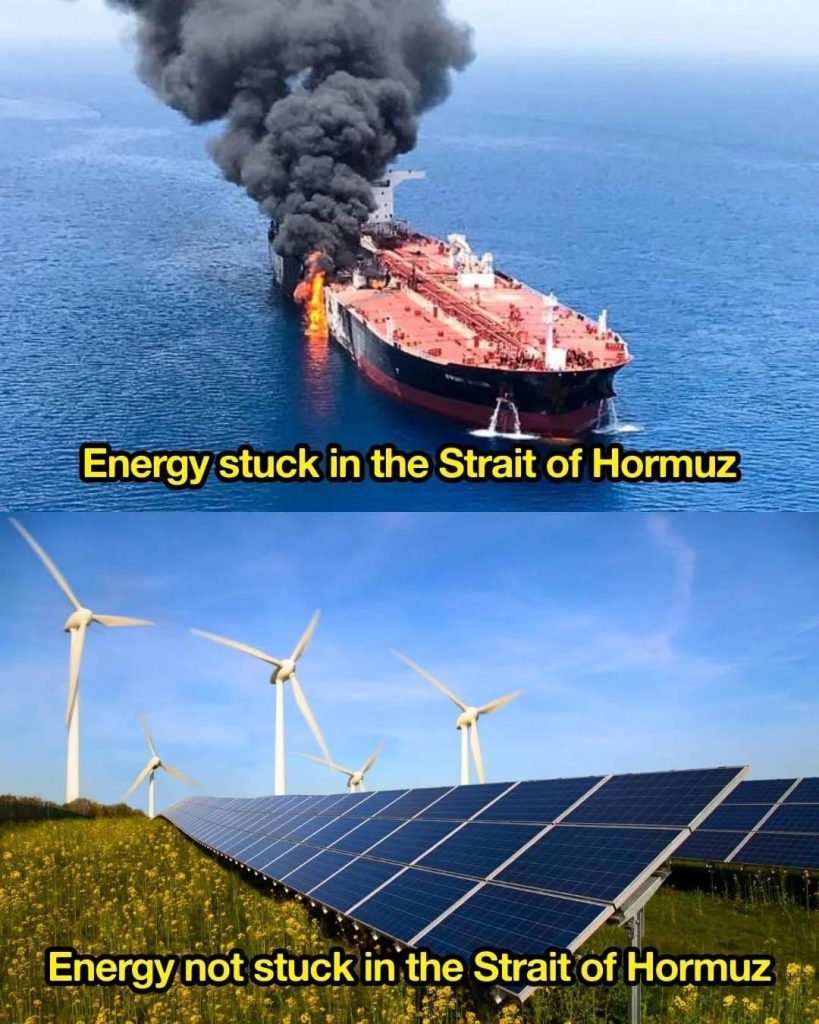
Our friends at Stop Rosebank highlight that dominion over this oil field would have little benefit to our domestic energy security, given that 80% of UK oil is exported. Instead, approving the project will continue to ‘ti[e] our economy to the geopolitical ripples of war’. Although some are musing over the North Sea’s potential to reduce the environmental impact of mass energy imports, fundamentally these “unstable” markets won’t bring us more security in the same way that renewable energy can. A pithy meme from Greenpeace sums it up well.
The job security argument
As COP30 underlined, a “just transition” is essential to the safe and fair movement from fossil fuels towards more sustainable economic models. This requires protecting the workers within fossil fuel-intensive industry, agriculture, oil and gas, ensuring high quality jobs are created.
Unite’s ongoing campaign, No Ban Without a Plan, stresses this factor in the shift to renewable energy. Amid the Iran war’s escalation, the union’s general secretary recently stated that “Domestic gas from Jackdaw and oil from Rosebank are essential for jobs” and that “we cannot let go of one rope before we have hold of another”. It is vital that we promote a politics of listening to workers who are experiencing this reality and their valid concerns about the potential negatives of this ban.
However, Stop Rosebank’s campaign website and pledges centre job security. We are encouraging MPs to sign the Rosebank pledge, which explicitly commits politicians to “advocate for a properly funded just transition for oil and gas workers and communities”. If we can persuade the Government to stop this oil field, they will need to invest in well paid green jobs and infrastructure in the North Sea that will be more sustainable in the long-term than fossil fuel industry jobs. Delaying the transition won’t fix the current issues, but a new system could.
The role of the Church
It is easy to separate ourselves from the messiness of international politics. But oil politics continues to impact all our lives because of our entanglement with the fossil fuel industry, most clearly revealed in our energy bills.
Churches have a long history of standing in solidarity with the most vulnerable communities. This includes both those being directly impacted by the climate crisis in the Global North and South, as well as those facing job losses in the North Sea without a just transition.
We must pray for peace, while acting on our Christian values of faith, hope and love which are clear in the fight against fossil fuels.
We believe the Stop Rosebank campaign emphasises our call to responsible stewardship of the Earth and follows Jesus’ example of loving our neighbour rather than seeking economic power or independence.2
Resources
You may like to use this prayer produced by the URC in response to the escalation in the Middle East.
We are currently promoting a climate craftivism project to send a craft to your MP, if they haven’t signed the Rosebank pledge. Please consider joining this if you have been persuaded by this post!
*In case you missed it
- For more research on land rights and social justice, check out this resource from the Methodist Church Global Networks for Mission (June 2025) Land_Rights_Social_Justice_20250617.pdf ↩︎
- This was articulated in the letter from Christian leaders to Keir Starmer in June 2025, highlighting theological arguments for stopping Rosebank. ↩︎
