The UK Government has just tabled a bill placing restrictions on Local Authorities and universities that is extraordinary in many ways.
The Economic Activity of Public Bodies (Overseas Matters) Bill states that central government (not Local Authorities or their constituents or the governing bodies of universities) are best placed to determine whether Local Authorities and universities should disinvest their funds on the basis of significant human rights abuses, or “political or moral disapproval of foreign state conduct”. Why such perspicacity is deemed to be the sole preserve of central government is not clear, especially given historical precedent.
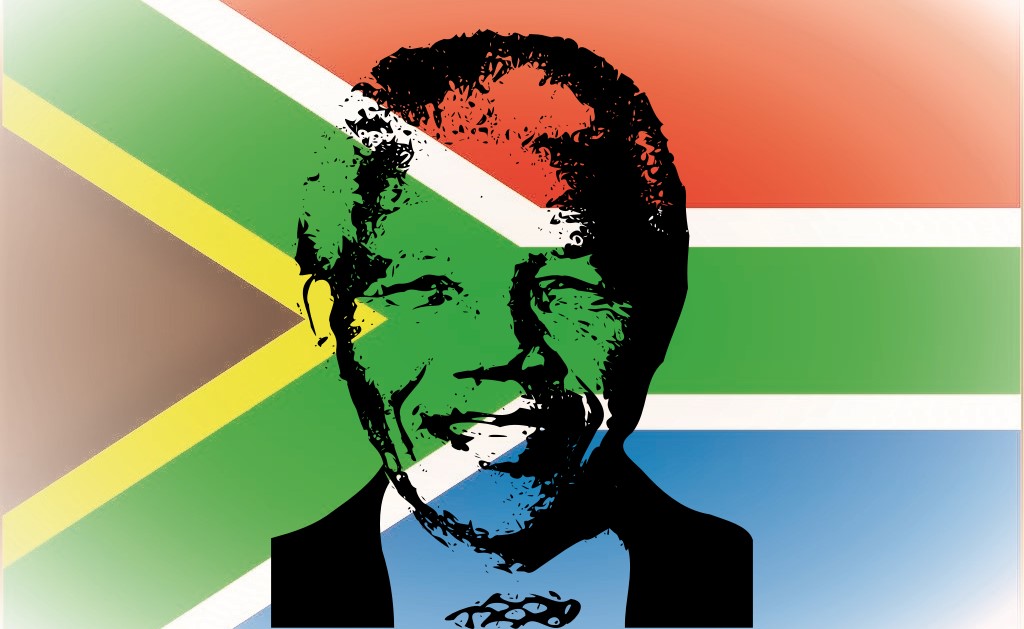
Had this legislation been in place in the early to mid-1980s, it would have banned efforts to bring pressure to bear on the Government of South Africa. The Anti-Apartheid Movement gathered pace in the 1960s. In 1962 it gained the support of the United Nations General Assembly with a call for economic measures, including the boycott of South African goods. The UK Government resisted this UN resolution. For the next decade and a half it continued to argue against boycott and divestment measures. Nevertheless, the Anti-Apartheid Movement became a global cause. Students, universities, trades unions, faith groups and Local Authorities all adopted anti-apartheid resolutions. Motions were passed to boycott the purchase of South African goods and to disinvest from South African companies, or UK companies with substantial South African subsidiaries.
By 1985, a total of 121 Local Authorities had adopted some sort of statement with respect to South Africa and of these, 38 had specific resolutions relating to their investments.[1] Several had disinvested from Barclays while the UK Government continued to oppose divestment.
When Nelson Mandela addressed the UK Parliament in 1996, his most fulsome thanks was not for the ‘wisdom’ of the UK government that opposed the boycott, divestment and sanctions movement. Instead, it was for “the millions of Britons who, through the years and like others everywhere else in the world, stood up to say no to apartheid.”[2] Surprisingly, despite the clear role of boycotts, divestments and sanctions in bringing about positive political and social change, our government now states that such actions on the part of Local Authorities and universities are “unacceptable”. The background note to the 2022 Queen’s Speech, which announced that a Bill would be forthcoming, asserts that “It is not acceptable that public bodies carry out campaigns where attempts are made to declare policies for boycotts, divestment or sanctions at variance with Government policy.”[3]
The Government states that its motivation for bringing this Bill is its concern over boycotts and divestment directed towards Israel. As with South Africa, there are many UN General Assembly and UN Security Council resolutions relating to Israel and the occupied Palestinian territories. This includes Security Council resolution 2334 which is supported by our government and calls on States to “distinguish, in their relevant dealings, between the territory of the State of Israel and the territories occupied since 1967”.[4] Leicester City Council has chosen to do just that. It has stated that it will boycott of goods from illegal Israeli settlements in the territories occupied since 1967, a decision which is entirely in sympathy with the Security Council resolution. Yet in its briefing on the Queen’s Speech,[5] the government condemns Leicester City Council for this action and is attempting to ban it with this Bill. In the light of UK government support of resolution 2334 this is puzzling to say the least and attests to the rather arbitrary nature in which the present government exercises judgement in these matters.
Also worrying is the fact that, as far as I can see, at no point has the UK Government ever discussed the guidance provided by the UN General Principles on Business and Human Rights or the UN Global Compact in relation to this Bill. These are influential in informing the policies of businesses operating in the context of conflict and, by extension, the policies of concerned investors. According to the Economic Activity of Public Bodies (Overseas Matters) Bill, public bodies must not exercise judgement on the basis of these globally accepted standards, but rather must subject themselves to UK Foreign Office policy, which offers no specific guidance on issues surrounding human rights, procurement and investment. The Bill would prevent local authorities, active local citizens and students, from exercising pressure through democratic means. This is a monstrous overreach of central government control of civil action. Had this Bill been enacted in the 1980s it would have been shameful; it would be no less damaging now.
For further information see Right to Boycott | Protect the right to boycott
[1] las11. Local Authority Action Against Apartheid (aamarchives.org) page 37
[2] Nelson-Mandela-speech-Parliament-1996.pdf
[3] Lobby Pack (10 May 2022) (publishing.service.gov.uk) page 134
[4] Microsoft Word – 231216 MEPP adopted res. – S RES 2334 (2016).docx (un.org)
[5] Lobby Pack (10 May 2022) (publishing.service.gov.uk) page 134
